

Table of Contents
How courts are digitizing in Nigeria right now? In short: the Federal High Court has ended manual filing in its Lagos division, the Supreme Court has launched a new Nigerian Case Management System under fresh 2026 Practice Directions, and several states, including Taraba, have introduced their own e-filing portals; together, these moves mark the most significant modernization of Nigeria’s judiciary in decades.
If you are a lawyer, a litigant, or a business trying to understand what this means for you, here is a complete, practical breakdown.
Why Nigeria’s Courts Needed This Overhaul
For years, Nigeria’s court system ran almost entirely on paper. Case files were compiled by hand, transported physically between registries, and stored in ways that made them vulnerable to loss, damage, or manipulation.
The scale of the problem was significant. Reporting on the judiciary’s digital transformation noted that over 90 percent of judges in the country were recording proceedings in longhand before recent reforms began. That single fact captures just how manual the system remained, even as most other sectors of Nigerian life had already gone digital.
This created real consequences for ordinary people. Cases dragged on for years partly because of paperwork delays. Lawyers lost valuable time chasing physical files instead of preparing arguments. Litigants sometimes lost cases entirely because a document went missing in transit between offices.
The Federal High Court Ends Manual Filing
The most tangible recent example of how courts are digitizing in Nigeria happened at the Federal High Court. The court announced that it would end manual filing in its Lagos Judicial Division, with the electronic filing platform becoming operational from April 27, 2026, and April 24, 2026 set as the final date for manual filing of new cases.
The rollout was not rushed. The court organized a two-day interactive training session for legal practitioners before the system went live, and urged strict compliance from lawyers.
By early May, the transition was complete. The Chief Judge of the Federal High Court described the shift as a necessary transformation rather than an optional reform, explaining that the move strengthens transparency and reduces the risks tied to physical case files, including loss, damage, and tampering. Importantly, litigants can now file processes remotely from anywhere with internet access, and court registries are no longer limited to traditional closing hours.
The Supreme Court Launches a National Case Management System
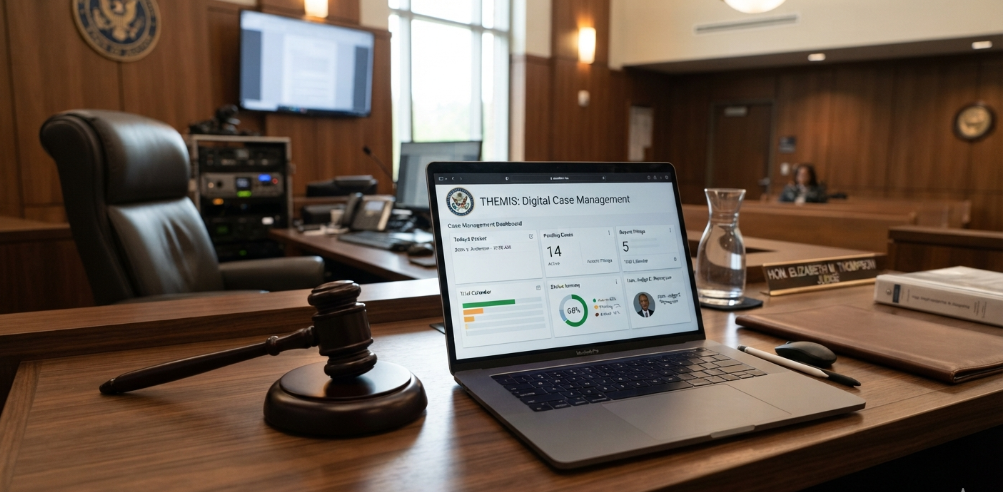
If the Federal High Court’s move was significant, the Supreme Court’s reform is even bigger. On July 1, 2026, the Chief Justice of Nigeria, Justice Kudirat Kekere-Ekun, officially launched the Nigerian Case Management System, describing it as a major step toward a fully digitized, technology-driven Supreme Court.
This came alongside new rules. The Supreme Court (Mandatory Upload of Electronic Copies of Processes, Record of Appeal, and Other Matters) Practice Directions, 2026 took effect on 1st July 2026, requiring parties in both pending and new matters to upload electronic copies of their court documents.
The rollout is happening in careful phases. The first phase focuses on appeals scheduled for hearing between September and December 2026, with counsel required to upload documents within set timelines, after which implementation expands quarterly. What makes the NCMS notable is its scope; unlike systems that operate in isolation, it is designed to integrate Nigeria’s superior courts into one unified system, connecting High Courts, the National Industrial Court, and the Sharia and Customary Courts of Appeal through to the Court of Appeal and Supreme Court.
States Are Following the Federal Lead
The digitization wave is not limited to federal courts. In January 2026, Taraba State became an early mover among the states, launching an electronic portal for filing criminal cases through the Nigerian Case Management System, alongside newly signed Civil Procedure Rules and a Practice Direction on e-filing for criminal cases.
The state’s governor called it a historic milestone and the first initiative of its kind in the state. This matters because it signals that digitization is not a one-off federal project; it is becoming a template that individual states are adapting to their own courts.
For anyone tracking how courts are digitizing in Nigeria at the grassroots level, state-level rollouts like Taraba’s are often the clearest early indicator of how quickly the reform will spread nationwide.
6 Ways Nigerian Courts Are Digitizing in 2026
Pulling these developments together, here are the concrete changes worth understanding.
- Mandatory e-filing replaces paper submissions. Both the Federal High Court’s Lagos division and the Supreme Court have now made electronic filing compulsory rather than optional, for new and, increasingly, pending matters.
- A unified national case management platform. The NCMS is designed to let a case move digitally from a High Court all the way up to the Supreme Court without re-entering paperwork at every stage.
- Digital signatures and e-affidavits. Lawyers are now encouraged to use digital signatures and electronic affidavit systems for sworn documents, cutting out physical notarization delays.
- Integrated payment systems for court fees. Filing fees are increasingly processed through integrated payment platforms, ensuring revenues are properly recorded rather than handled informally.
- Secure digital repositories with audit trails. The Supreme Court’s system creates a secure electronic repository and comprehensive audit trail for court documents, reducing opportunities for unauthorised alterations or loss.
- Round-the-clock access for litigants. Because filing no longer depends on physical registry hours, litigants and lawyers can now submit documents remotely, at any time, from anywhere with an internet connection.
What This Means for Lawyers, Litigants, and Businesses
For practicing lawyers, the immediate impact is procedural. Filing habits built over decades need to change quickly, and firms that invest early in training and digital workflows will adapt far more smoothly than those that wait. Our guide on digital court filing systems in Nigeria walks through the practical side of this shift in more detail, including a step-by-step look at how to file a court case online in Nigeria.
For litigants, the benefits are mostly about speed and security. Cases are less likely to stall because a physical file went missing, and remote filing means people outside major cities are no longer disadvantaged simply because they cannot travel to a registry.
For businesses, particularly those in regulated sectors, faster and more transparent court processes reduce legal risk. Contract disputes, regulatory challenges, and compliance matters can move through the system with a clearer paper trail, literally, an electronic one.
If you want to understand how this fits into the broader compliance landscape, our piece on judicial information systems in Nigeria offers useful additional context.

Challenges That Still Need Solving
It would not be honest to present this as a flawless rollout. Digitization at this scale always comes with friction.
Not every lawyer, particularly outside major cities, has reliable internet access or the digital literacy to navigate a new e-filing platform confidently. Training sessions help, but they need to be sustained rather than one-off events.
There is also the question of continuity. Cases filed before the digital cutoff dates continue to be processed manually until they conclude, which means courts must run hybrid paper-and-digital systems for years. That transitional period requires careful management to avoid new bottlenecks replacing the old ones.
Finally, cybersecurity has to be taken seriously. A digital repository of sensitive case records is only as trustworthy as the systems protecting it, and that trust has to be earned continuously, not assumed.
How Lexark Supports This Transition
As Nigeria’s courts move deeper into digital case management, the surrounding legal ecosystem needs to modernize alongside them. Lexark exists for exactly this reason: it brings Nigerian laws, regulations, and government tenders together in one AI-assisted, searchable platform.
While the courts are digitizing how cases are filed and tracked, Lexark focuses on digitizing how people find and understand the law itself, so lawyers, businesses, and everyday Nigerians are not left trying to keep up with two separate paper trails.
Conclusion
How courts are digitizing in Nigeria is no longer a question about the future; it is a story already being written across the Federal High Court, the Supreme Court, and state judiciaries from Lagos to Taraba. The paper-based system that shaped Nigerian litigation for generations is being replaced, deliberately and in phases, by one built for the realities of 2026.
The registry line is getting shorter. The question now is whether your filing habits are ready to move as fast as the courts already are.
Leave a Reply