

Table of Contents
Learning how to file a court case online in Nigeria is now more achievable than ever. You can do so through the Federal High Court’s e-Filing portal or the Lagos State CoMIS platform. The process involves registering an account, uploading case documents in PDF format, paying fees via Remita, and receiving electronic confirmation. This guide walks you through every step clearly.
Why Filing a Court Case Online in Nigeria Is Now Possible
Picture this. It is a Monday morning in Lagos. Traffic is already gridlocked on the Third Mainland Bridge. A lawyer has a case to file at the Federal High Court. Before April 2026, that meant physical documents, long queues, and unpredictable delays at the registry.
That picture is changing.
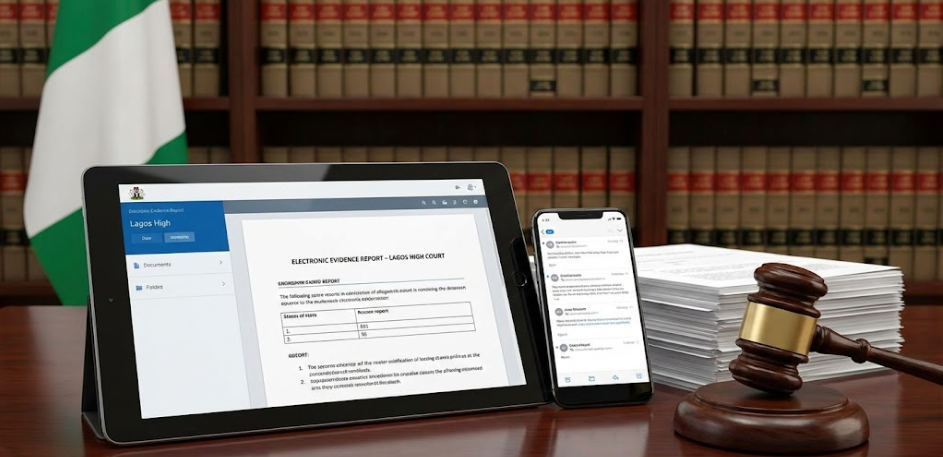
The Federal High Court of Nigeria formally launched its Electronic Filing (E-Filing) System in the Lagos Division, marking a major shift from manual, paper-based procedures to a digital case management platform designed to improve efficiency, transparency, and accountability in judicial administration.
This is not a small upgrade. It is a structural reset.
The Chief Judge of the Federal High Court, Justice John Tsoho, described the digital transition as the end of an outdated, paper-driven era in judicial administration. He noted that the initiative is a significant step toward enhancing efficiency, transparency, and service delivery within the Nigerian judiciary.
For lawyers, business owners, and everyday Nigerians who need access to justice; this development matters enormously. You no longer have to rearrange your entire week around a court registry visit. The question now is simply, how does it work?
Let us walk through it together.
Which Courts Currently Accept Online Case Filing in Nigeria?
Before you start uploading documents, it is important to know where online filing is available. Not every court in Nigeria has rolled out e-filing yet. Here is what is currently active:
Federal High Court (FHC) Lagos Division: As of April 2026, any lawyer in Lagos and, indeed, any part of the country can file cases at the Lagos Division of the Federal High Court from a laptop or smartphone, without physically visiting the court premises.
Lagos State Courts (CoMIS): The Lagos Court Management Information System covers the Lagos State High Court, Magistrate Court, and Small Claims Court. It supports e-filing, e-affidavits, and online payments for legal practitioners registered on the platform.
Federal High Court E-Affidavit Portal: On the 7th of June 2024, the Chief Judge of the Federal High Court of Nigeria issued a Practice Direction which allows litigants to depose to affidavits electronically at the Federal High Court. The Practice Direction came into effect on 1 July 2024.
What does this mean in practical terms? It means that if you have a matter before the Federal High Court in Lagos or any Lagos State court, you now have a fully digital pathway. For other states, reforms are underway but may not yet be live.
Over the past three years, Nigerian courts have accelerated efforts to digitize core workflows, including e-filing, remote hearings, and electronic case management.
What You Need Before You File a Court Case Online in Nigeria
Good preparation saves you from frustration. Before you attempt to file online, gather the following:
For Lawyers:
You will need your Nigerian Bar Association (NBA) membership number. The Federal High Court e-filing system is integrated with the NBA database, so registration is tied to verified legal practitioners. You will also need a valid email address, a working phone number, and a Remita-compatible payment method (bank account or card).
For the Case Documents:
All originating processes must be prepared and converted to searchable PDF format. Once logged in, you must upload all originating processes, including writs of summons, statements of claim, and affidavits, in searchable PDF format.
For Identification (E-Affidavit):
To ensure smooth and timely approval of your application, you must provide a corporate-standard passport photograph, a clear and legible signature on a plain white background, and a valid government-issued means of identification such as NIN, International Passport, Driver’s License, or Voter’s Card.
Do not begin the process without having these materials ready. Incomplete submissions can be rejected, and in some cases, non-refundable fees may have already been paid.
How to File a Court Case Online in Nigeria: 7 Clear Steps
Here is the step-by-step process for filing through the Federal High Court e-filing portal. While each court may have slight variations, this framework applies broadly.
Step 1: Visit the Official Portal
Go to fhcportal.ng for the Federal High Court. For Lagos State courts, visit the LagosCoMIS platform. Do not use third-party websites or unverified links; always access the official government portal directly.
Step 2: Create or Log Into Your Account
New users need to register. You will provide your full name, NBA number, email address, and phone number and create a secure password. Existing users simply log in with their credentials.
Step 3: Select “File New Case.”
Once inside your dashboard, locate the option to initiate a new filing. You will be prompted to choose the type of case you are filing and the appropriate judicial division.
Step 4: Upload Your Court Documents
Upload all required processes in searchable PDF format. This typically includes your writ of summons, statement of claim, and any supporting affidavits. Make sure each document is clearly named and properly formatted.
Lawyers and applicants create verified accounts, then fill templates or upload pre-drafted documents, pay fees online, and submit for review.
Step 5: Pay the Filing Fees
The new system allows lawyers to file processes and pay filing fees via the Remita platform, receiving immediate electronic service of court orders.
Payment is made digitally. Keep your payment confirmation; you will need it as proof of filing.
Step 6: Receive Your Confirmation and Case Number
Once your filing is submitted and payment confirmed, the system generates a unique case reference number. The NCMS, e-filing portal, and LegalMail platform were designed to create a seamless electronic ecosystem that allows cases to be filed online, managed efficiently by courts, and transferred smoothly through the judicial hierarchy in the event of appeals.
Step 7: Track Your Case Online
After filing, you can monitor your case status through the portal dashboard. You will receive notifications about hearing dates, court orders, and case updates electronically.

What Happens After You File?
Filing online does not mean the entire process is now digital end-to-end. There are a few nuances to understand.
The chief judge clarified that the transition will be gradual, as hard copies are still required for initial service under existing rules. This means that while filing is now done online, physical copies may still need to be served on opposing parties in certain circumstances.
The Nigerian Case Management System (NCMS) enables cases to be filed online, managed digitally, and transmitted seamlessly across appellate levels.
From the judge’s perspective, the difference is dramatic. Chief Judge Tsoho noted that the time it takes for a case file to move from the registry to a judge’s desk has dropped from several days to mere seconds.
That is not a small win. For litigants and their counsel, it means a more predictable, less frustrating experience.
Common Mistakes to Avoid When Filing a Court Case Online
Even with a clean digital process, mistakes happen. Here are the ones to watch for:
Uploading non-searchable PDFs: Scanned images of documents are often rejected. Ensure every PDF is text-searchable, not just a picture of a page.
Selecting the wrong jurisdiction: Nigeria’s courts have specific jurisdiction. Filing a matter at the wrong division, for example, filing a state matter at the Federal High Court, will result in a strike-out. Always confirm you are filing in the right court.
Incomplete documents: Missing a signature page, a seal, or a required exhibit can delay your filing or trigger rejection.
Abandoning the application mid-process: Failure to make payment or respond to queries within the stipulated time will result in automatic deletion of your application without refund and without notice. Always complete a filing in one session where possible.
Using unofficial payment channels: Filing fees must be paid through approved channels. Never pay anyone directly or use unverified intermediaries.


How Lexark Makes Legal Navigation Easier
Understanding the e-filing process is just one piece of the puzzle. Before you file a court case, you often need to understand the relevant law; the right statute, the correct procedural rule, or the specific regulation that governs your matter.
That is where Lexark comes in.
Lexark is a Nigerian AI-powered legal intelligence platform that gives you instant access to Nigerian laws, statutes, and regulations; all searchable in seconds. Instead of digging through scattered government portals or waiting for a librarian to retrieve physical law books, Lexark brings everything together in one place.
Whether you are a legal practitioner preparing processes before e-filing, a business owner trying to understand your rights before approaching a lawyer, or a researcher tracing the regulatory history of a sector; Lexark gives you the legal clarity you need to act with confidence.
You can also follow Lexark on Instagram for the latest insights on Nigerian law, legaltech, and regulatory updates.

Conclusion
Learning how to file a court case online in Nigeria is no longer a future skill; it is a present necessity. The Federal High Court’s e-filing launch in Lagos represents a genuine shift in how Nigeria administers justice. The process is accessible, the tools are live, and the barrier of physical distance no longer has to stand between you and the law.
But e-filing is only as effective as your preparation. Knowing the right law, the right court, and the right documents before you file is what separates a matter that moves forward from one that stalls.
So here is a question worth sitting with: if every barrier between you and the legal system could be removed, what would you do with that access?
That is the question Lexark is helping Nigerians answer, one search at a time.