

Table of Contents
Legal workflow automation tools are software systems that handle repetitive, time-consuming legal tasks; such as document drafting, client intake, deadline tracking, and approval routing; so lawyers can spend more hours on the legal thinking clients actually pay for. In practical terms, they replace stacks of paper, endless email chains, and manual reminders with a single, structured digital process.
Picture a two-partner commercial law firm in Lagos. Every Monday morning starts the same way: a paralegal digs through email threads to find which client documents are outstanding, a partner tries to recall which court filing is due that week, and a secretary manually types the same non-disclosure agreement for the fourth time this month. None of this is bad lawyering. It is simply the cost of running a firm without the right systems. And it is exactly the gap legal workflow automation tools were built to close.
What Are Legal Workflow Automation Tools?
At their core, legal workflow automation tools take a task that usually depends on someone remembering to do it, and turn it into a process that happens automatically, consistently, and on time. That might mean a client intake form that routes itself to the right associate, a contract template that fills in client details without retyping, or a system that flags a filing deadline three days before it becomes urgent.
This is different from simply “going digital.” Scanning a paper file into a PDF is digitization. Building a system where that file automatically moves to the next stage of a matter, notifies the responsible lawyer, and logs the time spent on it; that is automation. The distinction matters because many Nigerian firms have digitized their records without automating the workflows around them, which means they still carry the manual burden even after the switch to computers.
Why Nigerian Law Firms Are Turning to Legal Workflow Automation Tools
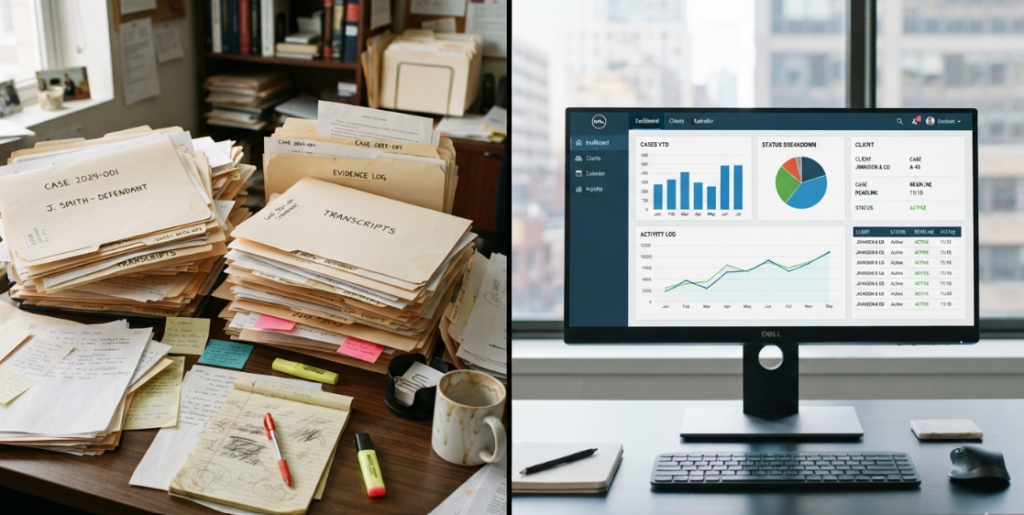
Nigeria’s legal sector has historically leaned on physical law libraries, paper case files, and manual court processes. That is changing quickly. Legal professionals in Nigeria have documented how tools that support digital legal research and workflow automation are steadily replacing the old dependence on physical volumes and disconnected registries, as firms respond to rising client expectations and a more complex regulatory environment.
Three pressures are driving this shift.
First, client expectations have changed. Corporate clients in banking, oil and gas, and telecoms now expect the same speed and transparency from their lawyers that they get from their banks’ mobile apps. A firm that cannot give a client a quick, accurate status update on their matter risks losing that client to one that can.
Second, the volume of regulatory work has grown. Nigeria’s regulatory environment spans data protection, financial services, tax, and sector-specific compliance, and it changes often. Firms that rely purely on manual tracking find it difficult to keep every client’s compliance obligations current, which is precisely where legal workflow automation tools add the most value; they turn recurring compliance checks into scheduled, trackable tasks instead of things someone has to remember.
Third, remote and hybrid work has made informal, “ask the person next to you” workflows unreliable. When a partner is in Abuja, an associate is working from home in Lagos, and a client is calling from Port Harcourt, a shared, automated system becomes the only reliable way to keep everyone on the same page.
Core Features to Look for in Legal Workflow Automation Tools
Not every piece of software marketed as “legal tech” genuinely automates workflow. Before adopting any system, it helps to know what separates a true workflow tool from a simple filing cabinet.
- Task and deadline automation. The system should assign tasks and calculate deadlines on its own, rather than relying on someone to set a reminder manually.
- Document assembly. Good legal workflow automation tools can generate contracts, letters, and pleadings from templates, pulling in client details automatically instead of requiring a fresh draft every time.
- Approval routing. Documents and requests should move to the right person for sign-off without anyone having to forward an email or walk down the hallway.
- Centralized matter tracking. Every document, deadline, and communication tied to a matter should live in one place, visible to everyone who needs it.
- Audit trails. For compliance-heavy work, the system should record who did what and when, which matters both for internal accountability and for regulators.
- Integration with existing tools. The best systems work alongside tools your team already uses, such as email and calendar apps, rather than forcing a complete change in habits overnight.
7 Types of Legal Workflow Automation Tools Every Firm Should Know
Legal workflow automation is not one product category; it is a set of related tools, each solving a different bottleneck. Understanding the categories makes it easier to identify where your firm actually needs help.
1. Client intake and onboarding systems. These automate the process of taking on a new client, from conflict checks to engagement letters, cutting down the back-and-forth that often delays the start of billable work.
2. Document assembly and drafting tools. These generate first drafts of routine documents, such as retainer agreements or standard contracts, using pre-approved templates and client data.
3. Deadline and calendar management systems. These automatically calculate statutory or court deadlines and send reminders, which is especially valuable in litigation, where a missed filing date can have serious consequences.
4. Approval and review workflows. These route documents through a defined chain of review, so nothing sits in someone’s inbox waiting to be noticed.
5. Billing and time-tracking automation. These capture billable time as work happens, rather than relying on lawyers to reconstruct their week from memory at month’s end.
6. Compliance monitoring tools. These track regulatory obligations tied to a client or matter and flag when action is needed, which is increasingly relevant given how often Nigerian regulations change.
7. AI-assisted research and drafting support. These help lawyers move through statutes, case law, and precedent faster, reducing the hours spent on manual search. If you want a deeper look at how research itself is being automated, this piece on how lawyers can automate legal research is worth reading alongside this one.
How to Choose the Right Legal Workflow Automation Tools for Your Firm

Not every firm needs every category of tool at once, and adopting too much too fast is a common reason automation projects stall. A more sustainable approach starts with identifying your single biggest bottleneck.
If deadlines are the recurring source of stress, start with a calendar and deadline automation tool. If your team spends hours drafting the same documents, start with document assembly. If billing disputes or write-offs are eating into revenue, start with time-tracking automation. Solving one bottleneck well tends to build the internal confidence needed to expand automation into other areas later.
It also helps to involve the people who will actually use the tool day to day. A system chosen by a managing partner without input from the associates and paralegals who will operate it often goes unused within a few months, regardless of how capable the software is.
Finally, consider how well a tool fits Nigeria’s specific legal environment. A system built purely around US or UK court procedures may not map well to Nigerian filing requirements or local regulatory obligations, so it is worth asking vendors directly how their workflows adapt to Nigerian practice. For firms exploring their broader options, this overview of legal collaboration tools for law firms is a useful next read.
Common Mistakes Firms Make When Adopting Legal Workflow Automation Tools
Even well-intentioned automation projects can fail, usually for predictable reasons.
The first mistake is automating a broken process. If your intake process is chaotic on paper, automating it simply makes the chaos move faster. It is worth mapping out and fixing the underlying process before building automation around it.
The second mistake is skipping training. Legal workflow automation tools only deliver value if the team actually uses them consistently. A short, structured onboarding period, even just a few hours, tends to pay for itself many times over in adoption rates.
The third mistake is treating automation as a one-time project rather than an ongoing practice. Regulations change, client needs evolve, and workflows should be revisited periodically rather than locked in permanently after the first setup.
The Future of Legal Workflow Automation Tools in Nigeria
Adoption of legal technology in Nigeria is still at an earlier stage than in markets like the US or UK, but the trajectory is clear. Legal professionals are increasingly documenting the shift from manual, paper-based processes toward digital research platforms and workflow tools as firms respond to case backlogs and rising client demand for efficiency.
As Nigeria’s regulatory landscape continues to grow more complex, particularly around data protection obligations, firms that build automated, auditable workflows now will find it far easier to stay compliant later, rather than scrambling to catch up. For a fuller picture of what’s shifting, this breakdown of Nigeria’s legal regulations database is a useful next stop. The firms leading this shift are not necessarily the largest ones; they are the ones willing to treat workflow design as seriously as they treat legal strategy. For a broader look at where the sector is heading, see this piece on the future of legal tech in Africa.
Conclusion
Legal workflow automation tools are no longer a luxury reserved for large international firms; they are becoming a practical necessity for any Nigerian law firm that wants to keep pace with client expectations and regulatory complexity. The firms that start small, fix one bottleneck at a time, and build the habit of using these systems consistently tend to see the biggest gains, both in time saved and in client trust earned.
So, looking at how your firm currently tracks deadlines, drafts documents, and manages client files: which single task, if automated tomorrow, would give your team back the most hours this month?