

Table of Contents
Legal collaboration tools for law firms are software platforms that let lawyers, paralegals, and clients share documents, communicate, and track case progress in one secure, centralised place, instead of scattered emails, WhatsApp threads, and physical files. The right combination of tools can turn a slow, fragmented workflow into a coordinated one, without compromising client confidentiality.
That is the quick answer. If you are trying to figure out which tools actually fit a Nigerian law firm’s day-to-day reality, and how to introduce them without disrupting your team, keep reading.
What Are Legal Collaboration Tools and Why They Matter Now
Nigeria’s legal sector is changing faster than most people outside it realise. Courtrooms are gradually adopting virtual proceedings, legal teams are spread across multiple cities and even multiple countries, and clients now expect real-time updates rather than a phone call once a week.
Legal collaboration tools for law firms exist precisely because generic apps were never built for this environment. A shared Google Drive folder does not track document versions the way a matter requires. A WhatsApp group does not preserve privilege the way client communication demands. Law firms handling sensitive, confidential, and often time-critical information need tools purpose-built for that reality, not repurposed consumer software.
At their core, these tools solve three problems at once: they centralise scattered information, they speed up communication between team members and clients, and they create an audit trail that protects both the firm and the client when questions arise later.
The Hidden Cost of Poor Collaboration in Nigerian Law Firms
Most firms underestimate how much fragmented collaboration actually costs them, because the losses are spread thin across dozens of small delays rather than one obvious failure.
Consider a typical scenario: a partner is in court, an associate is drafting a response, and a client is waiting for an update. If the only communication channel is email, the client’s question might sit unanswered for hours, the associate might be working from an outdated version of the draft, and the partner might return from court with no idea what has changed in their absence. None of this is a skills problem. It is a systems problem.
There is also a compliance dimension. When documents move through personal email accounts, personal phones, or unsecured messaging apps, firms lose visibility over where sensitive client data actually lives. That is a real risk under Nigeria’s data protection framework, which we cover in more detail further down.
And then there is the client experience. Clients who have to chase their lawyer for updates rarely stay client for long. In a market where legal services are increasingly compared on responsiveness, not just outcomes, that gap is costly.
Key Features to Look For
Before comparing specific tools, it helps to know what actually matters when choosing legal collaboration tools for law firms, rather than picking whatever is popular in other industries.
Matter-centric organisation. The tool should organise conversations and documents around a specific case or matter, not a generic project or channel, the way legal work actually happens.
Version control and document history. You should always be able to see who changed what, and when, especially on documents that pass through multiple reviewers before a client sees them.
Role-based access control. Not everyone on a matter needs to see everything. A good tool lets you control exactly who can view, edit, or share each document.
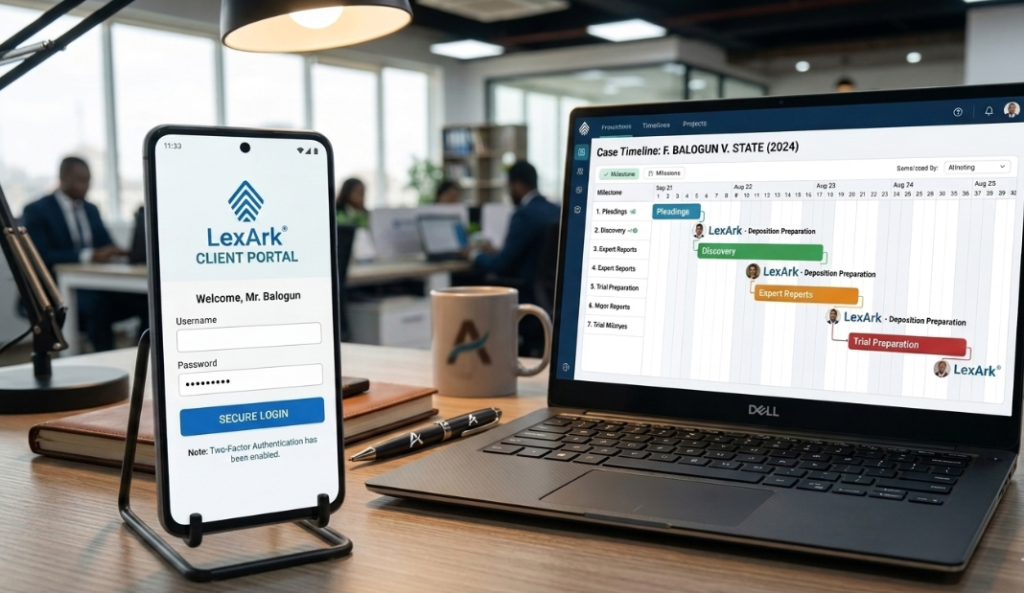
Secure client portals. Clients should be able to log in, check case updates, and access shared documents without a single unsecured email attachment changing hands.
Integration with existing workflows. A tool nobody wants to open every day quietly dies within a few months. Look for something that fits into your firm’s existing habits rather than demanding a complete overhaul.
Types of Legal Collaboration Tools for Law Firms
Not every firm needs every category below; the right mix depends on your size, practice areas, and how distributed your team already is.
Secure document management platforms. These handle storage, version tracking, and access control for case files, going well beyond what a standard shared drive offers.
Real-time communication platforms. Purpose-built or well-configured messaging and video tools let teams discuss a matter without leaving a paper trail scattered across personal devices.
Client portals. These give clients a single, secure place to check updates and access documents, replacing the constant back-and-forth of status-update emails.
Case and practice management software. These tie collaboration into the broader workflow: deadlines, billing, task assignment, and document handling in one connected system. Our guide to legal practice management software in Nigeria breaks this category down further.
AI-assisted legal research platforms. Research is a collaborative activity too, especially when multiple team members are working the same matter and need to work from the same verified sources rather than each doing their own separate search. Platforms like Lexark bring Nigerian laws, regulations, and even government tenders into one searchable space, so a team is not duplicating research effort or working from inconsistent sources. You can read more in our piece on AI tools for lawyers in Nigeria.
Collaboration, Compliance, and the Nigeria Data Protection Act
Any conversation about legal collaboration tools for law firms in Nigeria today has to include data protection, since it is no longer optional context; it is a legal requirement.
Under the Nigeria Data Protection Act, organisations that process personal data, including law firms handling client and case information, must apply appropriate technical and organisational safeguards. That means the collaboration tools your firm chooses are not just a productivity decision; they are a compliance decision.
This is exactly where generic consumer apps fall short. A personal WhatsApp account does not give a firm visibility over where data is stored or who can access it after a staff member leaves. A properly configured legal collaboration platform, by contrast, gives administrators control over access, retention, and audit trails, which matters both for compliance and for client trust.
Firms adopting new tools should build a simple habit: check that any platform handling client data offers encryption, access controls, and clear data-retention settings before rolling it out firm-wide. If you are working on the compliance side more broadly, our breakdown of the NIMC Act 2026 compliance requirements for businesses covers related obligations worth understanding alongside this.
Common Mistakes Firms Make When Adopting These Tools
Even good tools fail when they are introduced the wrong way. Here are the patterns worth watching for.
Rolling out too many tools at once. Adopting a document platform, a messaging app, and a client portal simultaneously overwhelms a team that was managing fine, if slowly, on fewer systems. Introduce one change, let it settle, then add the next.
Skipping staff training. A powerful tool used incorrectly creates more confusion than the fragmented system it replaced. A short onboarding session saves weeks of frustration later.
Ignoring access control settings. Many firms set every team member to full access by default, which defeats one of the main confidentiality benefits these tools are meant to provide.
Choosing tools built for other industries. Generic project management software built for marketing teams rarely fits the matter-centric, confidentiality-heavy structure of legal work. Purpose-built legal tools exist for a reason.

Choosing the Right Combination for Your Firm Size
There is no single “best” stack of legal collaboration tools for law firms; the right combination depends heavily on how big your team is and how your matters typically move.
Solo practitioners and two-person firms usually get the most value from a single, well-chosen client portal paired with a centralised research platform. At this size, the goal is not managing a large team; it is making sure nothing falls through the cracks between you and each client, and that research does not eat into billable hours.
Small firms of five to fifteen lawyers tend to benefit most from adding a proper document management system with version control, since this is the stage where informal habits, like emailing drafts back and forth, start to genuinely break down. A shared, access-controlled document space becomes less of a convenience and more of a necessity.
Mid-sized and larger firms typically need the full stack: document management, real-time communication, client portals, and case management tied together, ideally with some level of integration between them so lawyers are not logging into five separate systems throughout the day.
Firms with multiple office locations should weigh real-time communication tools especially heavily, since geographic distance is exactly the gap these platforms are designed to close. A team split between Lagos and Abuja, for instance, needs shared visibility into a matter just as much as a team sitting in the same room.
Whatever size your firm is, the underlying test stays the same: does this tool remove friction from how your team already works, or does it add a new layer of complexity on top of an already busy day? Tools that pass that test tend to stick. Tools that fail it tend to get quietly abandoned within a few months, no matter how good they looked in the sales demo.
What is the difference between legal collaboration tools and general project management software?
Legal collaboration tools are built around matters, confidentiality, and version control specific to legal work, while general project management tools are built for broader business tasks and usually lack legal-specific access controls.
Are legal collaboration tools expensive for small Nigerian firms?
Pricing varies widely. Many platforms offer tiered plans that scale with firm size, and the time saved on coordination often outweighs the subscription cost within the first few months.
Do these tools work for solo practitioners, or only large firms?
Solo practitioners benefit too, especially from secure client portals and centralised research tools, since they often juggle both legal and administrative work without support staff.
How do legal collaboration tools help with compliance?
By centralising documents and communication with proper access controls, encryption, and audit trails, these tools reduce the compliance risk that comes with data scattered across personal devices and unsecured apps.
Conclusion
The Nigerian law firms winning more work right now are not necessarily the ones with the biggest teams; they are the ones that coordinate the fastest, communicate the clearest, and never leave a client wondering what is happening with their case. Legal collaboration tools for law firms are how that coordination becomes possible at scale, without sacrificing the confidentiality the profession depends on.
Your next case is already waiting on a decision your team hasn’t made yet.
Leave a Reply