
Table of Contents
The NIN requirements under NIMC Act 2026 make the National Identification Number Nigeria’s sole legally recognised means of identification, meaning you now need a valid NIN to get a passport, register to vote, open a bank account, buy insurance, file taxes, apply for credit, register a SIM card, complete land transactions, and access several other public and private services.
If that list surprised you, you are not alone. Many Nigerians still think of the NIN as “just another card” tucked somewhere in a drawer. Under the new law, it has quietly become the single thread that connects almost every formal transaction in the country.
What Changed: NIN Requirements Under NIMC Act 2026 at a Glance
On June 26, 2026, President Bola Tinubu signed the National Identity Management Commission Act 2026 into law, repealing the NIMC Act of 2007 that had governed Nigeria’s identity system for nearly two decades.
The old law was written for a different era, one without mobile banking, digital SIM registration, or e-government portals. The new Act closes that gap. It formally establishes the “One Person, One Identity” principle and designates NIMC as the Root Certification Authority for Nigeria’s Public Key Infrastructure and Digital Public Infrastructure.

In plain terms, this means NIMC now sits at the centre of how Nigeria verifies who you are, both offline and online. Understanding the NIN requirements under NIMC Act 2026 is no longer a matter of curiosity; it is a practical necessity for daily life.
Why the Government Made NIN the Sole Means of Identification
For years, Nigerians juggled multiple identity documents: voter’s cards, driver’s licences, international passports, bank verification numbers, and state IDs, each issued by a different agency with its own database. The result was duplication, fraud, and a lot of wasted time re-verifying the same person over and over.
The new law consolidates all of this around one number. According to the Minister of Interior, the harmonisation effort has already helped security agencies cross-check records and identify persons of interest at points of entry, an outcome officials have pointed to as evidence that a unified system strengthens national security rather than simply adding bureaucracy.
For everyday citizens, the upside is meant to be convenience: fewer repeated registrations, faster verification, and a single credential that agencies and businesses can trust. That is the theory behind the NIN requirements under NIMC Act 2026, even if the full benefits will only become clear as implementation continues.
The 9 Services That Now Require Your NIN
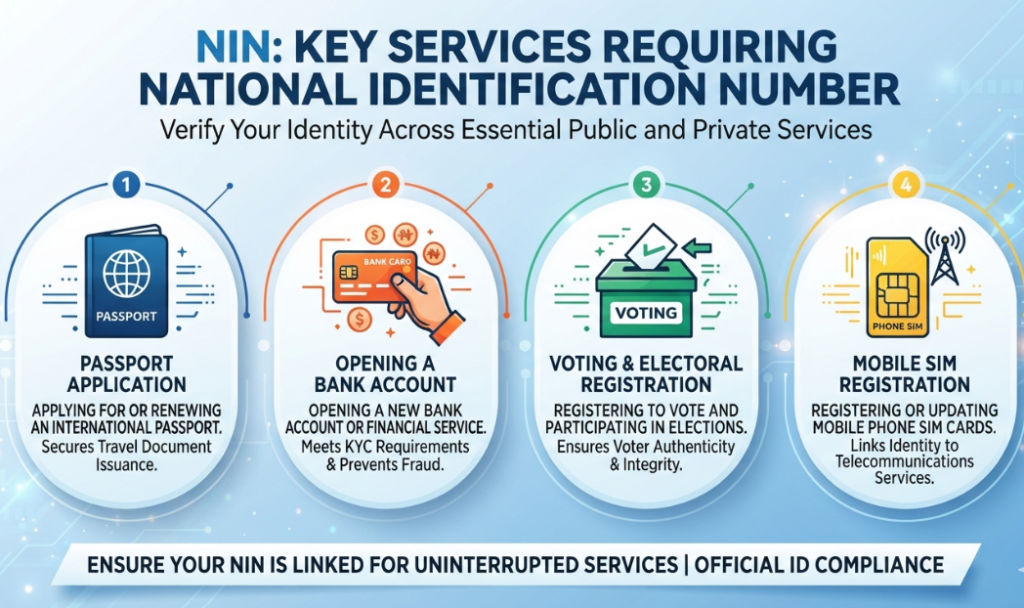
Here is the practical list every Nigerian should keep close. Under the new NIN requirements under NIMC Act 2026, you now need a valid NIN for:
- International passport applications, since NIMC data is now mandatory for passport issuance
- Voter registration with the Independent National Electoral Commission
- Opening or operating a bank account, including basic savings accounts
- Purchasing insurance policies, both life and general insurance products
- Filing tax returns with federal and state tax authorities
- Applying for consumer credit, including loans and buy-now-pay-later services
- SIM card registration, linking your phone line directly to your NIN
- Land transactions, including property registration and transfers
- Pension enrolment and claims, tying retirement savings to a single verified identity
This is not an exhaustive list, and more services are expected to be added as government agencies align their systems with NIMC’s database. But if you interact with any of the services above and do not yet have a NIN, that gap could soon stop you at the door.
What Happens If You Don’t Have a NIN?
In practice, not having a NIN increasingly means being turned away from essential services. Banks may decline to open new accounts. Telecom operators may be unable to register your SIM. Passport applications may stall at the verification stage.
There is also a more serious side to this. The Act introduces significantly stiffer penalties for identity-related offences, including a minimum of five years’ imprisonment for unauthorised access, multiple registration, or impersonation, alongside fines that can reach millions of naira for corporate bodies that mishandle identity data.
In other words, these new identity rules are not just an inconvenience for the unregistered; they represent a genuine legal and practical risk for anyone who tries to work around the system rather than through it.
How Your Personal Data Is Protected Under the New Rules
A fair question many Nigerians ask is: if my NIN now touches almost everything, how safe is my personal data? The Act was written with this concern in mind. It explicitly aligns with the Nigeria Data Protection Act, NDPA, which means your biometric data, address, and other personal details cannot be accessed without your consent, nor used for any purpose beyond what you agreed to.
Any disclosure of your identity information is meant to go through lawful channels, with narrow exceptions for matters like court orders or criminal investigations. NIMC has also stated it will intensify audits of its enrolment partners and third-party integrators to reduce the risk of data leaks similar to past incidents where NIN information was exposed through unauthorised websites.
That said, legislation alone cannot guarantee good outcomes. How well these protections hold up will depend heavily on how faithfully NIMC and its partners implement them in practice, something worth watching as the rollout continues.

NIN Requirements for Diaspora Nigerians and Vulnerable Groups
One encouraging feature of the new Act is its attention to inclusion. It requires NIMC to create specialised enrolment systems for vulnerable and underserved populations, including people without permanent addresses, so they are not locked out of essential services as identity verification becomes more central to daily life.
The law also introduces easier access routes for Nigerians living abroad, recognising that diaspora citizens still need functioning NIN records to access banking, property, and other services back home. If you fall into either group, it is worth checking directly with NIMC or a verified enrolment centre for the specific process that applies to you.
How to Register or Update Your NIN
If you do not yet have a NIN, or if your existing record needs updating, the process generally involves:
- Visiting an accredited NIMC enrolment centre with valid supporting documents
- Providing biometric data, including fingerprints and a facial scan
- Verifying your details against existing records where applicable
- Collecting your NIN slip, with a physical card to follow through NIMC’s distribution process
Because these requirements now touch so many services, it is worth registering, or verifying that your existing NIN details are accurate, well before you actually need it for something time-sensitive like a passport renewal or a bank transaction.
Common Mistakes Nigerians Make With Their NIN
A few recurring errors tend to cause the most frustration:
- Losing the NIN slip without keeping a digital copy of the number itself
- Mismatched details between the NIN record and other documents, such as a bank account or passport
- Attempting multiple registrations, which is now a serious offence under the Act rather than a harmless mistake
- Sharing NIN details carelessly with unverified third parties or unofficial websites
Avoiding these mistakes is a simple way to stay on the right side of the new rules while making sure your own records stay accurate and usable.
The New General Multipurpose Card: One Card, Multiple Uses
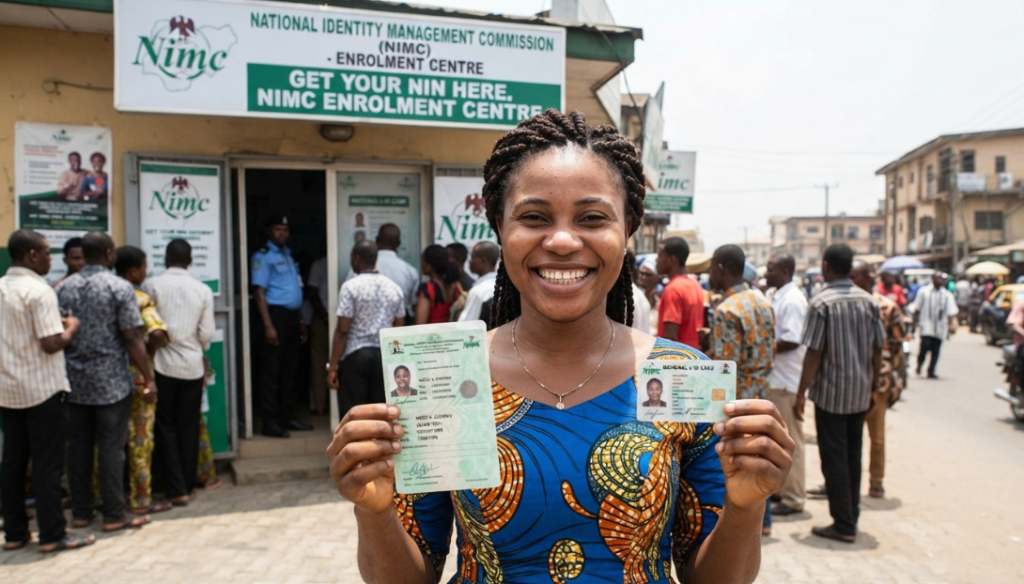
Alongside the NIN itself, the Act formally introduces the NIMC General Multipurpose Card, promoted under the theme “One Card, Multiple Possibilities.” The idea is to give citizens a single physical credential that can be used for identification, and eventually for services that once required separate cards altogether.
This is worth understanding because it reflects the broader philosophy behind the reform: fewer documents, less duplication, and one trusted record that different institutions can rely on. Whether the card rollout keeps pace with public demand will depend on NIMC’s implementation capacity in the months ahead, but the legal foundation for it is now firmly in place.
For everyday Nigerians, the practical advice stays the same regardless of how quickly the card itself becomes available: your NIN, not the physical card, is the credential that actually matters for these new rules, so make sure your NIN record is correct even before a new card reaches your hands.
What This Means for Nigerians Living in Rural or Underserved Areas
Identity reform of this scale can easily leave behind the people who need it most. NIMC has acknowledged this risk directly, and the Act includes specific obligations for reaching citizens without permanent addresses or easy access to enrolment centres.
In practice, this should mean mobile enrolment drives, partnerships with community leaders, and simplified documentation requirements for people who may not have formal proof of address. Whether these commitments translate into action on the ground is something civil society groups and legal observers will likely track closely over the coming year.
If you know someone in a rural community who has struggled to register, it is worth pointing them toward official NIMC channels rather than informal agents, since unauthorised enrolment centres are exactly the kind of activity the new penalties are designed to shut down.
Where to Read the Full Legal Text
If you want to go beyond summaries and read the actual statutory provisions, the complete National Identity Management Commission (Establishment) Act, 2026 is available through Lexark’s legal document library, searchable alongside other Nigerian laws, regulations, and government tenders.
For a broader breakdown of everything the reform changes, our detailed piece on NIMC Act 2026 explained covers the wider reforms, while businesses that handle NIN-linked data as part of their operations may find our companion article on NIMC Act 2026 compliance for businesses useful for understanding their own obligations. You can also explore Nigeria’s wider legal and regulatory database for related statutes.
Is NIN now mandatory for all Nigerians?
Yes. Under the new law, the NIN is Nigeria’s sole legally recognised means of identification, required for an expanding range of public and private services.
Can I open a bank account without a NIN?
In most cases, no. Banks are expected to require a valid NIN as part of standard identity verification during account opening.
What if I already have multiple identity documents but no NIN?
You should register for a NIN as soon as possible, since other documents like a driver’s licence or voter’s card no longer serve as substitutes under the new framework.
Is my personal data safe once I register for a NIN?
The Act requires NIMC to handle your data in line with the Nigeria Data Protection Act, meaning your information cannot be accessed or shared without your consent, except through lawful legal processes.
Conclusion
The government has been clear about where this is heading. As the Minister of Budget and Economic Planning put it, the success of the law will ultimately depend on how well it is implemented and whether it delivers real, tangible benefits to ordinary citizens, not just administrative tidiness on paper.
For now, the practical message for every Nigerian is simple. So, have you checked whether your NIN details are accurate and up to date, before the next passport, bank, or tax deadline forces you to find out the hard way?