
Table of Contents
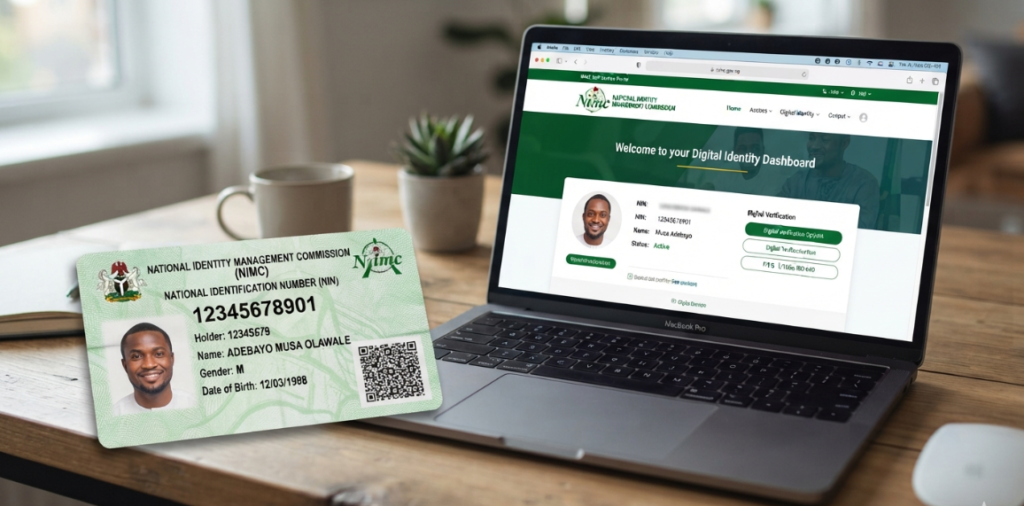
The NIMC Act 2026 explained in one sentence: it is the new law President Bola Tinubu signed on June 26, 2026, replacing Nigeria’s 19-year-old identity law and turning the National Identification Number (NIN) into the legal backbone of how every Nigerian verifies who they are, both online and offline. Below, we break down what changed, why it matters, and what it means for you.
What Is the NIMC Act 2026?
The NIMC Act 2026 is a new piece of federal legislation that repeals and replaces the old NIMC Act of 2007. It was signed into law at the State House in Abuja, in front of the Senate President, the Deputy Speaker of the House of Representatives, the Attorney General, the Minister of Interior, and the Director-General of the National Identity Management Commission (NIMC), Dr Abisoye Coker-Odusote.
For nearly two decades, Nigeria’s identity framework had barely changed while the world moved from paper registers to biometric databases, mobile banking, and digital signatures. The NIMC Act 2026 was written to close that gap. It gives NIMC far greater legal authority; it modernises how identity data is collected, verified, and protected; and it ties the NIN more tightly than ever to everyday life in Nigeria.
If you have ever wondered why your bank, telecom provider, or government office keeps asking for your NIN, this law is the reason those requests now carry real legal weight.
Why Nigeria Finally Replaced the 2007 NIMC Act
When the original NIMC Act was passed in 2007, Nigeria did not have a large-scale biometric identity database. Mobile banking barely existed. SIM registration was not yet mandatory. The idea of an app verifying your identity in seconds would have sounded far-fetched.
Fast forward to today, and the NIN has quietly become one of the most requested pieces of information in Nigerian life. It is tied to SIM cards, bank accounts, voter registration, and passport applications. Yet the legal framework governing all of this had not been touched in 19 years.
That mismatch created real problems. Government identity systems operated in silos; a person’s data at immigration had no connection to their data at NIMC. Fraudsters exploited the gaps between agencies. Ordinary citizens had little legal clarity on how their biometric data was being stored, shared, or protected.
The NIMC Act 2026 was designed to fix exactly that. It gives Nigeria’s identity system one unified legal structure instead of a patchwork of outdated rules.
7 Powerful Changes Under the NIMC Act 2026
Here are the seven most important shifts introduced by the new law.
1. NIMC Is Now Nigeria’s Root Certification Authority

Under the NIMC Act 2026, the Commission has been designated as Nigeria’s Root Certification Authority for the National Public Key Infrastructure (PKI) and Digital Public Infrastructure (DPI). In plain language, NIMC now controls the digital “trust” layer behind secure online transactions, digital signatures, and encrypted government documents.
Think of it the way a central bank guarantees the value of currency; NIMC now performs a similar guaranteeing role for digital identity and electronic trust across Nigeria.
2. NIN Is Now Mandatory Across More Services
The NIN has moved from being a convenient identifier to a compulsory legal requirement for an expanding list of services. Under the NIMC Act 2026, a valid NIN is required for passport applications, voter registration, opening a bank account, land transactions, telecom services, pensions, insurance, tax filing, and consumer credit facilities. Nigerian officials have summed up the philosophy behind this shift with a simple phrase: one person, one identity, one number.
3. Stronger Data Protection Aligned With the NDPA
Unlike the 2007 law, which said little about how personal data should be handled after collection, the NIMC Act 2026 explicitly aligns with the Nigeria Data Protection Act (NDPA). Your biometric data, address, date of birth, and linked credentials must now be processed, stored, and protected according to legally defined standards.
The core principle is simple: your data cannot be accessed without your consent, and it cannot be used for any purpose beyond what you originally agreed to.
4. Much Steeper Penalties for Identity Fraud
The NIMC Act 2026 dramatically increases the cost of breaking identity laws. Penalties have reportedly gone up by as much as 100 times compared to the old regime. Individuals convicted of unauthorised access, multiple registration, or impersonation now face a minimum of five years’ imprisonment. Corporate bodies that mishandle identity data can be fined up to ₦20 million.
This is one of the clearest signals in the entire Act: Nigeria intends to treat identity crime as seriously as financial crime.
5. A New General Multipurpose Card
The Act introduces the General Multipurpose Card (GMPC), designed under the theme “One Card, Multiple Possibilities.” The goal is to consolidate several identity credentials into a single, verifiable card that works across sectors, reducing the need for citizens to carry separate cards for separate purposes.
6. Expanded Inclusion for Vulnerable Groups and Diaspora Nigerians
The NIMC Act 2026 also creates a specific identifier system for vulnerable persons, including individuals without permanent residences, so they are not locked out of the formal identity system. Nigerians living abroad are also expected to benefit from streamlined enrolment and verification processes, making it easier to access identity services from outside the country.
7. A Reconstituted, More Accountable Governing Board
The law reshapes NIMC’s Governing Board to include representatives from fourteen key government agencies, among them the Independent National Electoral Commission, the Nigeria Police Force, the Department of State Services, the Economic and Financial Crimes Commission, and the Central Bank of Nigeria. The intention is tighter inter-agency coordination and stronger institutional accountability.
Real-World Impact: How NIMC Act 2026 Is Already Fighting Terrorism

One story from the signing ceremony captured public attention more than any policy summary could. The Minister of Interior, Dr Olubunmi Tunji-Ojo, revealed that just days before the Act was signed, seven known commanders of Boko Haram and ISWAP were arrested at Katsina Airport as they returned from a trip to Mecca. They were identified and intercepted because NIMC’s identity database is now connected directly to immigration systems, which in turn interface with international policing networks.
Before these reforms, Nigeria’s identity systems operated independently of one another. A person could pass through one government checkpoint without triggering any alert at another. The Minister described it plainly: what shows up in immigration now matches what is on file with NIMC, and no Nigerian passport can be issued today without pulling data from the NIMC database.
This single case illustrates why the NIMC Act 2026 is not just an administrative update. It is infrastructure with direct national security consequences.
What NIMC Act 2026 Means for Everyday Nigerians
For the average Nigerian, the practical effects will show up gradually rather than overnight. Expect fewer repeated registrations, since agencies will increasingly share verified data instead of asking you to submit the same documents again and again. Expect stronger legal backing when you question how your personal data is being used, since the NDPA-aligned provisions give you clearer rights.
Expect, too, a heavier emphasis on having your NIN sorted out early. Since it now underpins so many services, delays in NIN registration or verification could increasingly translate into delays in accessing banking, telecom, or government services.
Students, researchers, and everyday citizens who want to understand their rights under this new framework do not need a law degree to do so. Plain-language explainers and searchable legal databases exist precisely to close that knowledge gap.
What NIMC Act 2026 Means for Businesses and Legal Practitioners
For business owners who want the NIMC Act 2026 explained from a risk standpoint rather than a headline standpoint, here is the short version. Businesses that collect or verify identity data, banks, telecom companies, insurers, fintech platforms, and even HR departments, now operate under a much stricter compliance environment. Any organisation that accesses NIN-linked data through NIMC’s verification infrastructure is bound by the same data protection obligations described above, with real financial and criminal exposure for getting it wrong.
For legal practitioners, this is a fast-moving regulatory area worth tracking closely. Lawyers advising banking, telecom, or data-driven clients will need to stay current on how NIMC’s expanded powers interact with existing obligations under the NDPA. If your practice already leans on structured Nigerian legal regulations database tools to track fast-changing statutes, the NIMC Act 2026 is a strong example of why that habit pays off. Platforms like Lexark simply make it faster to search the full text of laws like this one, alongside related regulations, instead of piecing information together from press statements.
How to Stay Informed and Compliant
Anyone searching for NIMC Act 2026 explained in practical, actionable terms usually wants one thing: a checklist. Given how quickly implementation details can change, here are practical steps worth taking now.
First, confirm your NIN is correctly linked to your core services, including your SIM, bank account, and any government-issued documents. Second, if you run a business that handles customer identity data, review your data protection policy against NDPA standards, since the NIMC Act 2026 leans heavily on that framework. Third, keep an eye on NIMC’s official communications for implementation timelines, since some provisions will roll out in phases.
Lawyers and compliance officers advising clients in banking, telecoms, or oil and gas should treat this Act as a live compliance issue, not a one-time news story. Nigerian legal professionals looking to sharpen their research process around fast-moving regulations may also find it useful to explore AI-assisted legal research tools built for Nigerian law.
What does the NIMC Act 2026 replace?
It repeals and replaces the NIMC Act No. 23 of 2007, which had governed Nigeria’s identity system for nearly two decades.
Is NIN now mandatory for bank accounts and passports?
Yes. Under the NIMC Act 2026, a valid NIN is a legal requirement for passport applications, bank accounts, voter registration, and several other services.
What happens if someone misuses my identity data?
he Act introduces significantly tougher penalties, including a minimum five-year prison term for unauthorised access, multiple registration, or impersonation, and fines of up to ₦20 million for corporate offenders.
Does the NIMC Act 2026 improve data privacy?
Yes. It explicitly aligns with the Nigeria Data Protection Act, requiring consent-based data handling and restricting the use of personal information beyond its original purpose.
Final Thoughts
The NIMC Act 2026 explained simply comes down to this: Nigeria has finally given its identity system a legal framework built for the digital age, not the paper age. From counterterrorism wins at Katsina Airport to stricter data protection rules for every business that touches your NIN, the ripple effects of this law will be felt across sectors for years to come.
As implementation continues to unfold, one question is worth sitting with: is your NIN, your business, or your legal practice actually ready for a Nigeria where one identity number connects almost everything?